
In a development unprecedented within Australia, the Australian Capital Territory (ACT) Labor government has indicated it will consider expanding voluntary assisted dying (VAD) laws to encompass patients who have lost decision-making capacity — a decision that has reignited longstanding concerns regarding the so-called ‘slippery slope’ of euthanasia legislation.
ACT Health Minister Rachel Stephen-Smith informed the Legislative Assembly last week that following the commencement of the Territory’s VAD regime in November 2025, the government would evaluate possible legislative amendments to permit advance directives for assisted dying. These provisions would allow individuals to access euthanasia after losing capacity, provided they had made a formal request beforehand.
The Territory’s current legislative framework, passed in June 2023, mandates that individuals possess full cognitive and decision-making capacity at the time of request and administration. However, several members of the Assembly, including Labor MLA Marisa Paterson, have expressed support for permitting euthanasia in accordance with prior instructions — effectively extending access to patients suffering cognitive decline, such as from dementia.
A question of ethics
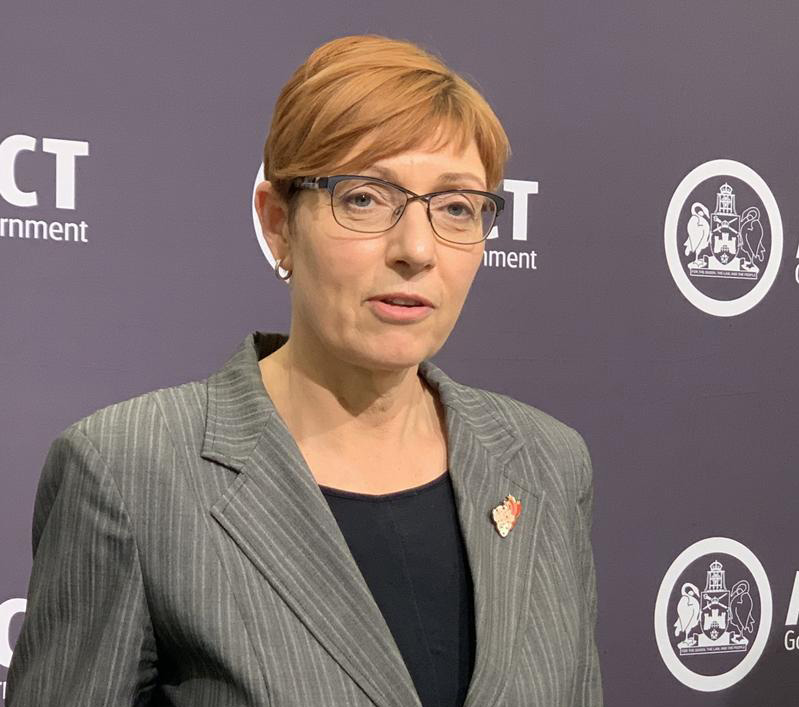
ACT Health Minister Rachel Stephen-Smith, pictured during a media briefing, said the issue “touches on deeply held values about dignity, autonomy, and compassion at the end of life”.
“To be genuinely voluntary, a person must understand the nature and consequences of the decision and be able to communicate that choice,” she said. Nonetheless, the ACT Health Directorate has already undertaken preliminary consultations with clinicians, families, and international experts. A wider community consultation process is anticipated in early 2026, subject to the outcomes of the legislation’s first year of operation.
The Minister confirmed that any potential expansion would involve “co-design” with healthcare professionals, advocates, and community stakeholders. Pressure to broaden the scheme continues from political quarters, particularly from the ACT Greens and advocacy groups such as Dying with Dignity ACT.
Greens MLA Andrew Braddock has argued that the legal scope should reflect community expectations, allowing individuals to make binding end-of-life choices in anticipation of cognitive decline. “We want to ensure the scope of the scheme aligns with the Canberra community’s wishes for end-of-life choices to prevent intolerable suffering,” he said.
Opposition to the proposal has been vocal among Christian and pro-life organisations, including the Canberra Declaration, who argue that international experience demonstrates a gradual erosion of safeguards once assisted dying is legalised.
Warwick Marsh, co-founder of the group, cautioned that expanding eligibility to those unable to consent risks transforming a right into an obligation. “The most vulnerable will be at risk,” Mr Marsh said. “Many other jurisdictions insisted there would be no slippery slope, but history proves this has not been the case.”
Several international precedents are frequently cited in support of these concerns. Belgium, for example, legalised euthanasia in 2002 for adults experiencing “unbearable” suffering — whether physical or mental — even where no terminal illness is present. In 2014, it became the first country to extend access to minors with parental consent.
The Netherlands, which introduced euthanasia legislation in 2002, now permits euthanasia for minors aged 12 and over, with parental approval, as well as for individuals experiencing psychological conditions such as depression, autism, and intellectual disabilities. Additionally, advance directives for patients with dementia are permissible.
In Canada, Medical Assistance in Dying (MAiD) was introduced in 2016 for patients with “grievous and irremediable” conditions, provided their natural death was reasonably foreseeable. That restriction was overturned in 2019, when the Quebec Superior Court ruled in Truchon c Procureur général du Canada that requiring a foreseeable death violated individuals’ rights under the Canadian Charter.
The Canadian Court emphasised that, as established in the Supreme Court’s 2015 Carter decision, the core principle of MAiD legislation is not the proximity of death, but rather respect for personal autonomy, dignity, and the alleviation of intolerable suffering. The Truchon decision reinforced this view, stating that the foundation of the Carter ruling was the individual’s will and relief from suffering—not the timing of death. Although mental illness was initially set to become a qualifying condition in 2023, its inclusion has been deferred until 2027.
Concerns regarding assisted death
Advocates for maintaining strict safeguards point to troubling international cases. In the Netherlands, these have included the euthanasia of a woman in her twenties who was a survivor of sexual abuse, a 41-year-old man with alcoholism, and an incident involving a patient reportedly euthanised while resisting. Such cases, they argue, demonstrate the moral and legal hazards of expanding euthanasia access without robust and enforceable protections.
“These horror stories are not hypothetical,” said Bill Muehlenberg, author of The Challenge of Euthanasia. “They are a stark warning of what happens when the sanctity of life is compromised.”
The ACT government has stated that no changes will be made until at least 12 months after the law is in effect. However, for Christian groups and others concerned about the expanding scope of euthanasia laws, the planned review process emphasises the importance of continued monitoring.
These groups believe that compassion is not measured by how quickly suffering is ended, but by the willingness to support those who are in pain. They call for better measures of palliative care, including stronger advocacy for patients, and more rigorous support for families as respectful and dignified alternatives to assisted dying.
For these stakeholders, the message is simple: life must be protected from beginning to end, especially for those who can no longer speak for themselves. As debate continues in the ACT, lawmakers must listen to those who urge society to prioritise life, particularly the lives of those who are unable to advocate for their own.
References:
Carter v Canada (Attorney General) [2015] 1 SCR 331.
https://scc-csc.lexum.com/scc-csc/scc-csc/en/item/14637/index.do
Criminal Code, RSC 1985, c C-46, ss 241.1–241.4.
https://laws-lois.justice.gc.ca/eng/acts/C-46/
Muehlenberg, B. (2016). The challenge of euthanasia: Life and death matters. CreateSpace Independent Publishing Platform.
Truchon c Procureur général du Canada [2019] QCCS 3792.https://www.canlii.org/en/qc/qccs/doc/2019/2019qccs3792/2019qccs3792.html
Voluntary Assisted Dying Act 2024 (ACT).https://www.legislation.act.gov.au/DownloadFile/a/2024-24/current/PDF/2024-24.PDF


